
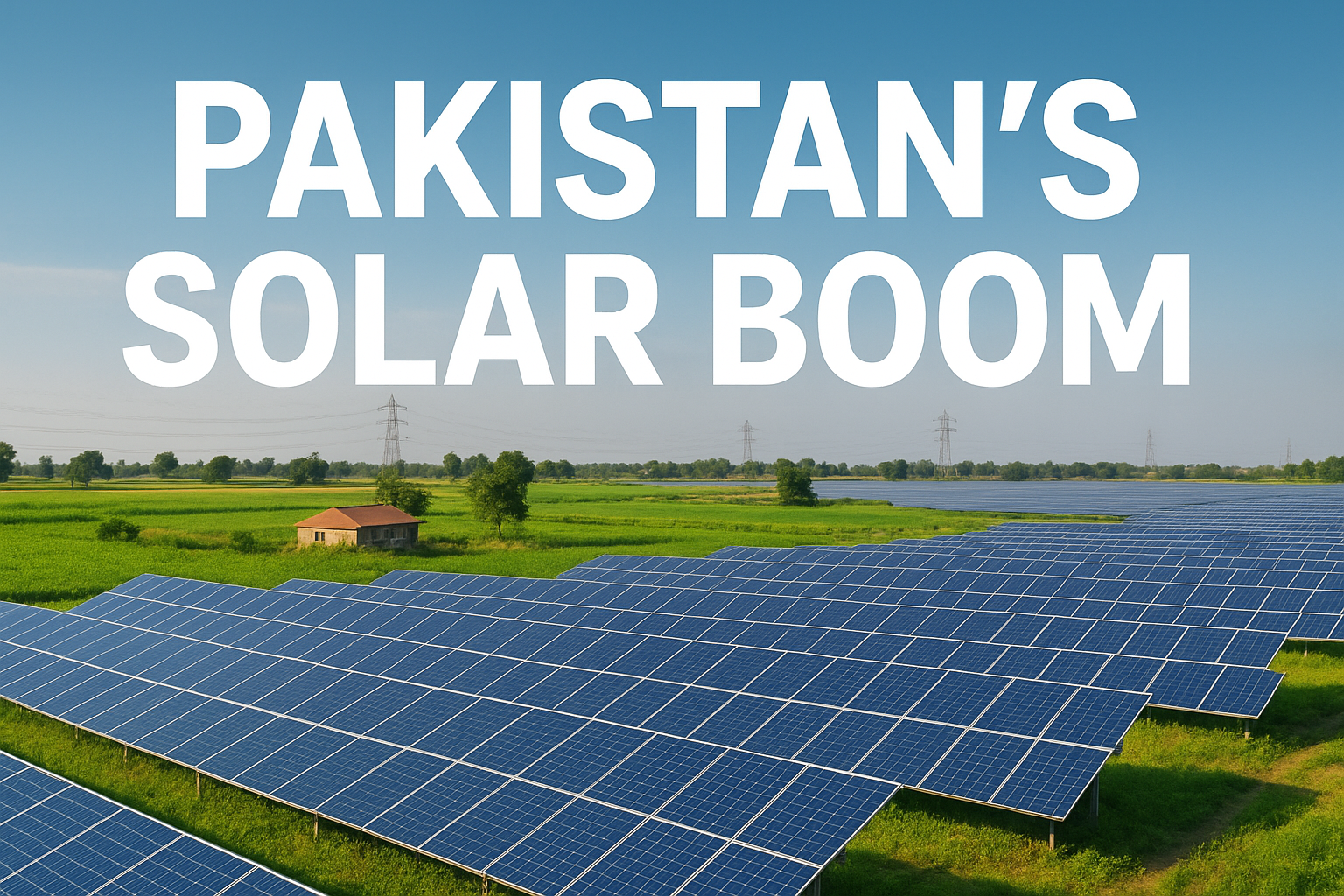
Pakistan’s Solar Boom: A Bright Revolution
Pakistan’s Solar Boom is reshaping the nation’s energy landscape. From rural farms to bustling cities, affordable solar power is helping homes, businesses, and industries cut costs, reduce outages, and embrace a cleaner future.

1. From Modest Beginnings to Global Leadership
In 2023, solar was a minor player in Pakistan’s power mix. But by early 2025, solar had surged to become the largest source of electricity—delivering over 25% of all utility-supplied power ( Wikipedia). This extraordinary leap makes Pakistan one of fewer than 20 countries globally to hit that milestone.
2. Pakistan’s Solar Boom Imports on Overdrive
The backbone of this transformation? A massive influx of solar panels from China. Between 2022 and 2024, imports skyrocketed from 3.5 GW to over 16.6 GW, with more than 10 GW arriving in just the first months of 2025 (Reuters). In 2024 alone, Pakistan imported 17 GW, accounting for around a third of its total power capacity (BNN Bloomberg, Wikipedia).
3. Driving Forces: High Power Prices Meet Cheap Solar
This boom wasn’t engineered by subsidies—it was fueled by soaring electricity prices, steep cuts in fuel subsidies, and falling solar panel prices (BNN Bloomberg . Consumers across farms, households, and factories rushed toward solar as a cost-saving lifeline.
4. Life-Changing Impact, Especially in Agriculture
Take Mohammad Murtaza, a corn farmer near Lahore. After switching his irrigation pumps to solar, his energy bill dropped by 80%, and he now cultivates three crops a year instead of two (Business Standard). This resonates broadly: in Lahore’s agricultural belt, up to 95% of farms have gone solar.
5. Uneven Benefits and Grid Challenges
Yet this momentum isn’t without issues. Effluent solar adoption has left state utilities reeling from lost demand—since 2014, they’ve accumulated losses of about PKR 2.4 trillion (~USD 8.6 billion) (Business Standard). Meanwhile, middle-class and apartment dwellers are largely being left behind due to affordability, space constraints, and rental hurdles. Additionally, new changes to the net-metering policy could stall future growth.
6. Infrastructure and Policy Gaps
Rapid deployment has outpaced grid adaptation. Experts emphasize that upskilling the workforce and improving grid integration are essential to sustain the solar boom (The Express Tribune).
7. Echoing Far Beyond Borders
Pakistan’s solar boom offers a blueprint for other emerging economies—demonstrating how consumer-led renewable energy adoption can drive rapid shifts. Falling battery prices and abundant Chinese supply have further accelerated this trend (Financial Times). As renewable energy surges globally, Pakistan stands out as a transformative case study (The New Yorker).
Pakistan’s Solar Boom Final Shine: What’s Next?
Pakistan’s solar surge is a beacon of both opportunity and caution. It’s propelled the country into a select global solar club—but without inclusive policies and grid resilience, the shine could dim. As electricity prices stabilize and technology continues to drop, the real test lies in ensuring solar’s benefits are accessible, sustainable, and equitable.
Ready to be part of Pakistan’s Solar Boom?
At Purewave Energy, we offer complete solar solutions — from high-quality panels to efficient inverters — tailored to your needs. Let’s power your future with the sun.

